Grand Egyptian Museum visitor guide

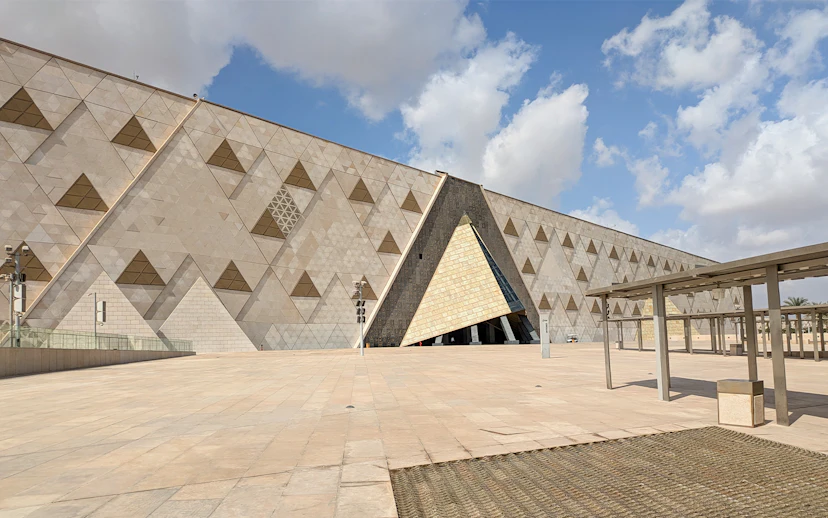
The Grand Egyptian Museum is Cairo’s flagship archaeology museum, best known for displaying Tutankhamun’s full funerary assemblage together in one place. What catches most visitors out is not complexity but scale: this is a huge, modern museum complex where a casual quick look usually turns into 3+ hours of walking, galleries, and pauses. The biggest difference between a rushed visit and a rewarding one is protecting time for the Tutankhamun galleries. This guide covers timing, entry, route, and ticket choices.

Quick overview: Grand Egyptian Museum at a glance

If you only read one section before booking, make it this one.

  • When to visit: Daily, typically 9am–6pm. Tuesday–Thursday right after opening feels noticeably calmer than Friday and Saturday from 11am–3pm, because combo tours and late-morning arrivals stack up in the Grand Hall and Tutankhamun galleries.
  • Getting in: From about EGP 1,450 for standard adult entry. Prebooked entry tickets on Headout start from about US$41, and guided visits with transfers cost more. Booking ahead matters most for winter weekends and holiday periods, while ordinary weekdays are usually easier.
  • How long to allow: 3–5 hours for most visitors. The full main galleries, Tutankhamun rooms, and Khufu’s Boats Museum push you toward the longer end.
  • What most people miss: Khufu’s Boats Museum and the quieter object-rich stops on the Grand Staircase, because the arrival architecture and Tutankhamun rooms drain time and attention early.
  • Is a guide worth it? Yes, if this is your first major Egyptology museum or you only have half a day; if you like moving slowly and reading labels, self-guided works well enough for less.

🎟️ Timed slots for Grand Egyptian Museum tighten up several days in advance during winter weekends and holiday periods. Lock in your visit before the time you want is gone. → See ticket options

Jump to what you need

🕒 Where and when to go

Hours, directions, entrances and the best time to arrive

🗓️ How much time do you need?

Visit lengths, suggested routes and how to plan around your time

🎟️ Which ticket is right for you?

Compare all entry options, tours and special experiences

🗺️ Getting around

How the galleries are laid out and the route that makes most sense

🏺 What to see

Tutankhamun galleries, Grand Staircase, Khufu’s Boats Museum

♿ Facilities and accessibility

Restrooms, lockers, accessibility details and family services

Where and when to go

How do you get to the Grand Egyptian Museum?

The museum sits on the Giza side of Cairo beside the pyramids corridor, off the Cairo–Alexandria Desert Road, and is easiest to reach by car rather than public transit alone.

Gate 9, Cairo–Alexandria Desert Road, Kafr Nassar, Al Haram, Giza Governorate, Egypt

→ Open in Google Maps

  • Taxi / rideshare: Gate 9 drop-off → 1–3 min walk → the most practical option from central Cairo or Giza hotels.
  • Metro + taxi: Giza station (Line 2) → 20–30 min taxi ride → useful only if you’re already on the metro network.
  • Hotel transfer / private car: Gate 9 → direct handoff → the lowest-stress option if you have a timed slot or family with you.
  • From the pyramids area: official tourist walkway / short drive → easiest if you are pairing GEM with Giza on the same day.

→ Full getting there guide

Which entrance should you use?

Grand Egyptian Museum currently works around a single public access point, and the mistake most visitors make is treating it like a walk-up museum rather than a timed-entry site.

  • Located at Gate 9 on the Cairo–Alexandria Desert Road approach. Expect about 5–10 min at security on ordinary weekdays, and 10–20 min on winter weekends and holidays.

→ Full entrances guide

When is Grand Egyptian Museum open?

  • Monday–Sunday: 9am–6pm
  • Last entry: 4pm

When is it busiest? Friday and Saturday from late morning into mid-afternoon, plus December–February, are the most crowded windows, when the Grand Hall and Tutankhamun galleries feel noticeably tighter.

When should you actually go? Aim for the first slot Tuesday–Thursday if you want room to move and cleaner sightlines on the Grand Staircase before tour groups fully build.

Where and when to go

💡 Pro tip: Don’t arrive 45 minutes early for a timed slot expecting a head start — GEM usually admits by slot, so showing up 10–15 minutes before entry is smarter than standing outside longer.

→ Check the complete Grand Egyptian Museum schedule

How much time do you need?

Visit typeRouteDurationWalking distanceWhat you get

Highlights only

Grand Hall → Grand Staircase → selected main galleries → Tutankhamun galleries → exit

2–3 hours

~2km

You get the museum’s biggest emotional beats, but you will skip most of the 12 main galleries and likely miss Khufu’s Boats Museum.

Balanced visit

Grand Hall → Grand Staircase → main galleries → Tutankhamun galleries → Khufu’s Boats Museum → commercial area

3.5–4.5 hours

~4km

This is the best first visit for most travelers, adding enough context and range without forcing an all-day museum pace.

Full exploration

Forecourt and Hanging Obelisk → Grand Hall → Grand Staircase → full main galleries → Tutankhamun galleries → Khufu’s Boats Museum → gardens / café break

5+ hours

~6km

You get the museum as it was designed to be experienced, but it is a long indoor day and fatigue usually sets in before the end.

How much time do you need?

Which ticket does your route need?

All 3 routes work on a standard entry ticket. Upgrades add logistical help and interpretation, not extra access.

✨ The full route is harder solo — many visitors spend too long up front and arrive at Tutankhamun tired. A guided tour handles the pacing and gives the collection the context it needs. → See guided tour options

Which Grand Egyptian Museum ticket is best for you

Ticket typeWhat's includedBest forPrice range

**Official timed-entry admission**

Timed entry + main galleries + Tutankhamun galleries + Grand Hall + Grand Staircase + Khufu’s Boats Museum + gardens

A self-directed museum visit where you want the lowest direct cost and are happy to manage your own pace and route.

From EGP 1,450

**Grand Egyptian Museum Skip-the-Line Tickets**

Prebooked timed entry + digital confirmation + access to the main museum areas

A first visit where you want to avoid checkout friction and show up with a valid ticket already sorted.

Entry (from US$41) ↗

**Grand Egyptian Museum Skip-the-Line Tickets with Private Hotel Transfers**

Timed entry + private hotel pickup and drop-off + museum access

A timed museum visit where Cairo traffic, hotel logistics, or traveling with children matters more than saving every dollar.

**Grand Egyptian Museum guided tour with hotel transfers**

Timed entry + licensed guide + hotel pickup and drop-off

A large, context-heavy museum visit where you want someone else to shape the route and explain why the key objects matter.

**Grand Egyptian Museum + Egyptian Museum combo**

Museum entry at GEM + entry to the Egyptian Museum in Cairo

A comparison visit where you actively want both the new museum experience and the older downtown collection in the same trip.

Combo (from US$63.65) ↗

**Grand Egyptian Museum + Giza Pyramids full-day tour**

GEM access + Giza complex visit + transport + full-day itinerary

A one-day Cairo plan where breadth matters more than spending 5 hours inside GEM alone.

Full-day combo (from US$89) ↗

Which Grand Egyptian Museum ticket is best for you

⚠️ Watch out for unofficial sellers. Street vendors and kiosks near Grand Egyptian Museum often sell overpriced or invalid tickets. Buy only through the official site or a verified partner — an invalid ticket means joining the longest queue anyway, with no recourse.

How do you get around Grand Egyptian Museum?

Museum layout

Grand Egyptian Museum is sprawling and sequence-based rather than compact, which means it is easy to self-navigate once you understand the spine of the building, but also easy to burn too much time before the main galleries.

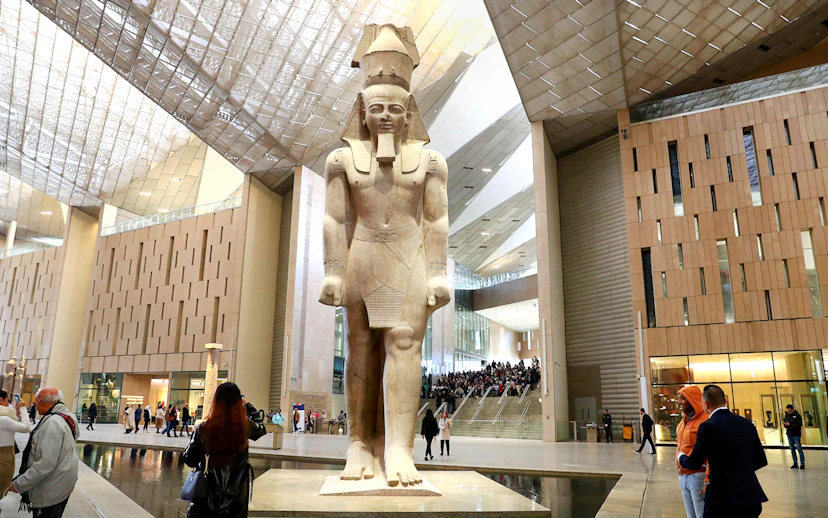
  • Forecourt and Grand Hall: Arrival spaces with the Hanging Obelisk and Ramesses II → plan 15–30 min before you move deeper.
  • Grand Staircase: Ceremonial transition lined with major sculpture → plan 15–25 min, more if you like architecture as much as objects.
  • Main galleries: 12 chronological and thematic galleries across the core museum story → plan 90–180 min depending on how much you read.
  • Tutankhamun galleries: Full funerary assemblage displayed together → plan 60–90 min, and don’t leave it until the very end.
  • Khufu’s Boats Museum and gardens: Extra payoff after the core route → plan 20–35 min if your energy is still good.

Suggested route: do the arrival sequence once, then move steadily through the main galleries before Tutankhamun, because most visitors linger too long in the front spaces and end up rushing what they came for.

Maps and navigation tools

  • Map: Download or screenshot the museum plan before arrival → it helps with the full route and is easiest to sort before security.
  • Signage: Good on the main spine and numbered galleries → strong enough for self-guided visits, but weak against fatigue late in the route.
  • Audio guide / app: A live guide adds more value here than phone-based self-navigation → the museum is large, and the context matters more than simple wayfinding.

💡 Pro tip: Save Khufu’s Boats Museum for after Tutankhamun only if you still have 30 minutes of real energy left — it is one of the easiest parts of GEM to skip by accident after a long core route.
Get the Grand Egyptian Museum map / audio guide

Where are the masterpieces inside Grand Egyptian Museum?

Hanging Obelisk at Grand Egyptian Museum
Ramesses II statue in Grand Hall
Grand Staircase inside the museum
Tutankhamun golden burial mask display
Golden Throne in Tutankhamun galleries
Guardian statue in Tutankhamun section
Khufu boats display at Grand Egyptian Museum
1/7

Hanging Obelisk

Attribute — Era: New Kingdom, Dynasty 19

The Hanging Obelisk sets the tone before you even reach the main hall. It is memorable not just because of its size, but because the raised presentation lets you see details most obelisks hide from view. What many visitors rush past is the underside, where the cartouches become part of the experience rather than background stone.

Where to find it: In the entrance forecourt before the main museum interiors.

Grand Hall and Ramesses II

Attribute — Ruler: Ramesses II

This is the museum’s arrival moment and one of the clearest examples of how GEM stages scale. The colossal statue of Ramesses II is impressive on its own, but the real payoff is seeing how the glass, stone, and open volume frame it as you walk in. Most people stop for the first photo and move on too quickly.

Where to find it: In the main entrance atrium immediately after you enter the museum.

Grand Staircase

Attribute — Type: Monumental architectural spine

The Grand Staircase is not just a walkway between floors; it is a curated sequence of 59 objects that bridges spectacle and historical logic. Slow down here, because this is where the museum starts teaching you how to read the collection. Many visitors treat it as circulation space and miss the staged progression of kingship and monumentality.

Where to find it: Rising from the Grand Hall toward the main gallery level.

Tutankhamun’s Golden Burial Mask

Attribute — Material: Gold, glass, lapis lazuli, obsidian, carnelian, faience, and quartzite

This is the object most visitors have pictured long before they arrive, and it still lands. The key is to give it patient time rather than a fast phone shot, because the inscription on the back and the balance between royal likeness and divine image are what make it more than a famous face. Crowds tend to compress people here.

Where to find it: Inside the Tutankhamun galleries, within the core funerary display sequence.

Golden Throne

Attribute — Object type: Decorated royal chair

The Golden Throne surprises people because it feels intimate rather than monumental. The scene of Tutankhamun and Ankhesenamun beneath the Aten’s rays rewards slower looking, and it often hits harder than flashier objects nearby. Many visitors glance at the gold and move on without noticing the domestic tenderness of the imagery.

Where to find it: In the Tutankhamun galleries, along the object sequence from the burial assemblage.

Guardian Statue with Nemes Headcloth

Attribute — Object type: Life-sized funerary guardian statue

This statue is easy to undervalue if you are chasing gold, but it helps the burial story make sense. It once stood before the sealed burial chamber doorway, so it gives you atmosphere and function, not just beauty. What people often miss is how posture, staff, and placement communicate protection rather than portraiture.

Where to find it: In the Tutankhamun galleries, positioned within the burial-chamber narrative section.

Khufu’s Boats Museum

Attribute — Association: Khufu and the Giza necropolis

This part of the museum reconnects GEM to the wider Giza landscape rather than keeping the day locked inside galleries. The real payoff is technical: the reconstruction, joinery, and funerary logic behind the boats. It is one of the museum’s most commonly skipped highlights, largely because visitors reach it after Tutankhamun when attention is already dropping.

Where to find it: In the museum’s additional collection zone beyond the main galleries.

Where are the masterpieces inside Grand Egyptian Museum?

💡 Don't leave without seeing: Khufu’s Boats Museum and the object sequence on the Grand Staircase, because both sit just outside the museum’s strongest crowd magnets and are easy to cut when energy drops after Tutankhamun.

→ See the complete highlights guide

Facilities and accessibility

  • 🎒 Cloakroom / lockers: Free lockers are available, and they are the best place to leave bulky bags before you start the galleries.
  • 🚻 Restrooms: Restrooms are available within the public museum areas and commercial zone, so you do not need to exit the complex for basic breaks.
  • 🍽️ Cafés and restaurants: The museum has several cafés and restaurants in its commercial area, which makes it easy to build in a mid-visit coffee or lunch stop.
  • 🛍️ Gift shop / merchandise: Retail areas are part of the public commercial zone, and they are best saved for the end unless you want to carry purchases through a long route.
  • 🪑 Seating / rest areas: Your best reset points are the commercial area, café seating, and the wider transition spaces between the major gallery zones.
  • Mobility: Step-free access is available through the main public route, but allow extra buffer because staff handling for assisted routing can be inconsistent on the ground.
  • 👁️ Visual impairments: The museum is spacious and visually legible, but it is still an object-heavy experience where a companion or live guide adds more value than independent browsing alone.
  • 🧠 Cognitive and sensory needs: Tuesday–Thursday opening slots are the calmest option, while the Grand Hall, Grand Staircase, and Tutankhamun galleries are the loudest and most visually intense areas.
  • 👨‍👩‍👧 Families and strollers: The main route is wide enough for strollers, but the full visit is long enough that younger children usually need planned breaks in the commercial spaces.

Grand Egyptian Museum works best for school-age children, curious preteens, and families who mix the headline objects with breaks rather than trying to do everything.

  • 🕐 Time: 2.5–3.5 hours is realistic with younger children, and the smartest priorities are the Grand Hall, Staircase, Tutankhamun galleries, and one break.
  • 🏠 Facilities: The commercial area, cafés, restrooms, and family-focused add-ons like the Children’s Museum make the site easier than an object-only museum day.
  • 💡 Engagement: Frame the visit around a few anchors — Ramesses II, the golden mask, and Khufu’s Boats — instead of asking children to stay focused through every gallery.
  • 🎒 Logistics: Bring a small bag, not a bulky one, buy water after security, and aim for the first slot of the day before attention drops and crowds build.
  • 📍 After your visit: The Giza pyramids area is the most obvious child-friendly follow-on if your family still has energy for one more big visual stop.

Rules and restrictions

What you need to know before you go

  • Timed-entry booking is the standard way to visit, and the safest plan is to arrive with a prebooked ticket rather than expecting to sort entry at the gate.
  • Large bags and restricted gear should go into the free lockers before you enter the galleries, which is one reason small bags move through security faster.
  • Re-entry is not permitted once you exit, so use the on-site cafés, restrooms, and seating areas before leaving the ticketed zone.

Not allowed

  • 🚫 Outside food and drink are not permitted in the museum, so plan to buy water or snacks once you are through security.
  • 🖐️ Do not touch sculptures, barriers, or display surfaces, because the museum uses distance and controlled sightlines to protect fragile material.
  • 📷 Professional camera gear is tightly controlled, and tripods, selfie sticks, drones, flash, and live-streaming setups are not allowed.

Photography

Personal photos and video are generally allowed at Grand Egyptian Museum, but the rules are not blanket-wide. Photography is restricted in designated areas of the Tutankhamun galleries, and the museum bans flash, tripods, selfie sticks, drones, and live streaming equipment throughout. If you plan to take pictures, think phone or simple personal camera rather than gear-heavy shooting.

Good to know

  • Your timed slot matters more than arriving extra early, so showing up 30–45 minutes ahead usually means more waiting, not faster entry.
  • GEM is photo-friendly in many areas, but the Tutankhamun galleries are where the rules become tighter, so do not assume the same policy applies everywhere.
Rules and restrictions

⚠️ Re-entry is not permitted once you exit Grand Egyptian Museum. Plan restroom stops, meals, and rest breaks before leaving — the on-site cafés are inside the ticketed zone, and returning through Gate 9 means repeating security and risking a longer wait.

Practical tips

  • Book 7–14 days ahead for winter weekends and holiday periods, because GEM is timed-entry and the best morning slots go first even when weekday sell-outs are uncommon.
  • If the official checkout rejects your card, switch early to a verified prebooked ticket instead of troubleshooting on the day — this is one of the few attractions where payment friction is a real trip-planning issue.
  • Arrive 10–15 minutes before your slot, not 45 minutes before, because staff usually admit by timed window and early arrivals often just stand outside longer.
  • Protect 60–90 minutes for the Tutankhamun galleries before you do cafés or shopping, because the front-of-house architecture can quietly eat the best part of your attention span.
  • Tuesday–Thursday opening slots are the sweet spot if you want space on the Grand Staircase and less compression in the Tut rooms than you get later on Friday and Saturday.
  • Bring a small day bag and leave bulky gear behind, because free lockers help, but security and bag drop still slow down the start of your visit.
  • Buy water after security instead of assuming refill points will be easy to find, because visitors regularly report bottled water for sale but not reliable refill stations.
  • If you are pairing GEM with the pyramids, decide in advance whether you want breadth or depth — 1 day can cover both, but the museum will feel compressed by late afternoon traffic and fatigue.

What else is worth visiting nearby?

Commonly paired: Giza pyramids

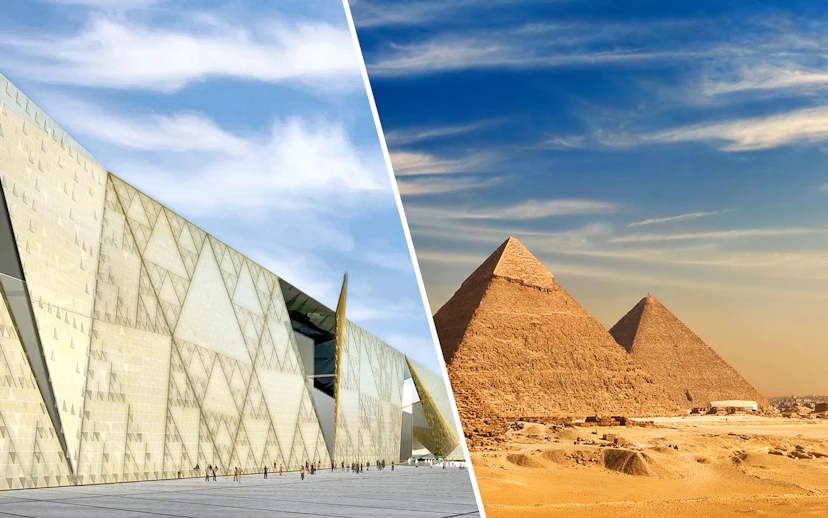
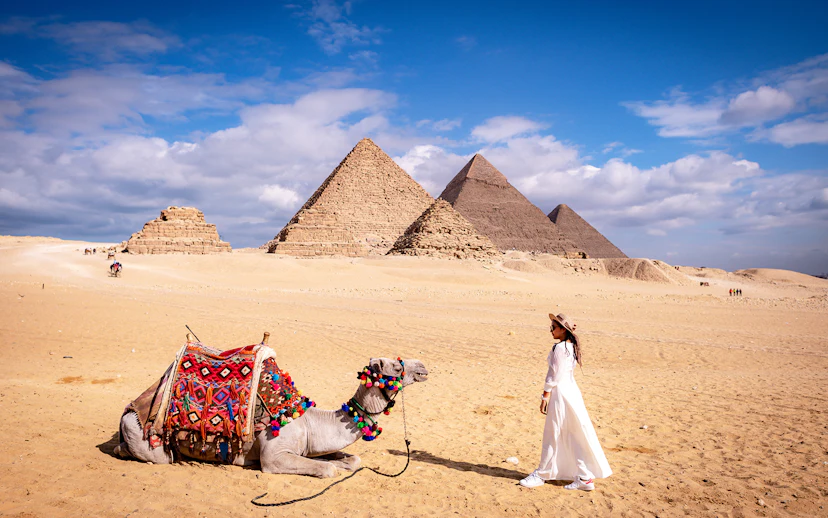
Giza Pyramids
Distance: about 1.3km — 20–25 min via the official tourist walkway or 5–10 min by car
Why people combine them: It is the cleanest ancient-Egypt pairing in Cairo — the pyramids give you scale outdoors, and GEM gives you the objects and story indoors.
→ Book / Learn more

✨ Grand Egyptian Museum and Giza Pyramids are most commonly visited together — and simplest to do on a combo ticket. A bundled full-day option keeps transport and timing in one plan, which matters more in Cairo than the headline price alone. → See combo options

Commonly paired: Egyptian Museum in Cairo

Egyptian Museum in Cairo
Distance: about 16.4km — 30–45 min by car, depending on traffic
Why people combine them: People pair these 2 when they want to compare the old downtown museum atmosphere with GEM’s newer, cleaner, more structured presentation.
→ Book / Learn more

Also nearby

National Museum of Egyptian Civilization
Distance: about 25km — 35–50 min by car
Worth knowing: This is the stronger add-on if royal mummies matter to you more than repeating another broad object collection.

Khan el-Khalili
Distance: about 22km — 40–55 min by car
Worth knowing: It works better as an evening follow-on than a same-block stop, especially if you want a bazaar meal or shopping after a museum-only day.

Eat, shop and stay near Grand Egyptian Museum

  • On-site: The museum’s cafés and casual restaurants in the commercial area are the easiest choice for coffee, sandwiches, and light meals, and they make more sense as a mid-visit reset than as a destination lunch.
  • Pyramids-area restaurants: 10–15 min drive, Giza Plateau; best if you are combining GEM with the pyramids and want a proper sit-down meal after the museum.
  • Kafr Nassar cafés: 5–10 min drive, around the Gate 9 approach; useful for a quick coffee before entry if you are arriving early by car or hotel transfer.
  • Central Cairo restaurants: 35–45 min drive, downtown Cairo; better saved for dinner after a museum-only day, because the traffic back into the city is the real planning cost.
  • Pro tip: Eat either before you enter or once you are committed to a long break inside — stopping too early usually steals time from the main galleries and leaves Tutankhamun rushed.
  • Grand Egyptian Museum gift shop: The easiest place to buy exhibition books, replicas, and cleaner museum-grade souvenirs without adding another stop in Cairo.
  • Pyramids-area bazaars: Better for low-cost souvenir shopping than museum-quality objects, but only worth the detour if you do not mind browsing and bargaining after a long visit.

The area around GEM is practical more than atmospheric. It works well if your main goal is early access to the museum or a same-day pyramids pairing, but it is not the best base for most first-time Cairo visits. Central Cairo still gives you better restaurant choice, easier evenings, and more flexibility if GEM is only 1 part of the trip.

  • Price point: The area skews toward convenience-led stays near Giza rather than broad-value city neighborhoods, though pyramid-view properties can justify the trade-off.
  • Best for: Travelers on a short Cairo stay who want the simplest morning logistics for GEM and the pyramids without long cross-city transfers.
  • Consider instead: Central Cairo or Zamalek if you want restaurants, evening walking, and better balance across multiple Cairo sights; stay closer to the Giza Plateau only if GEM and the pyramids are your main focus.

Frequently asked questions about visiting Grand Egyptian Museum

Most visits take 3–5 hours, though a fast highlights route can be done in about 2–3 hours. The difference is whether you only do the Grand Hall, Staircase, and Tutankhamun galleries, or also give proper time to the main galleries and Khufu’s Boats Museum.

More reads

Grand Egyptian Museum tickets

Grand Egyptian Museum highlights

Getting to Grand Egyptian Museum

Cairo travel guide