Cairo Tickets
Grand Egyptian Museum (GEM)

Hanging Obelisk

Included with Grand Egyptian Museum (GEM) tickets

Timings

RECOMMENDED DURATION

5 hours

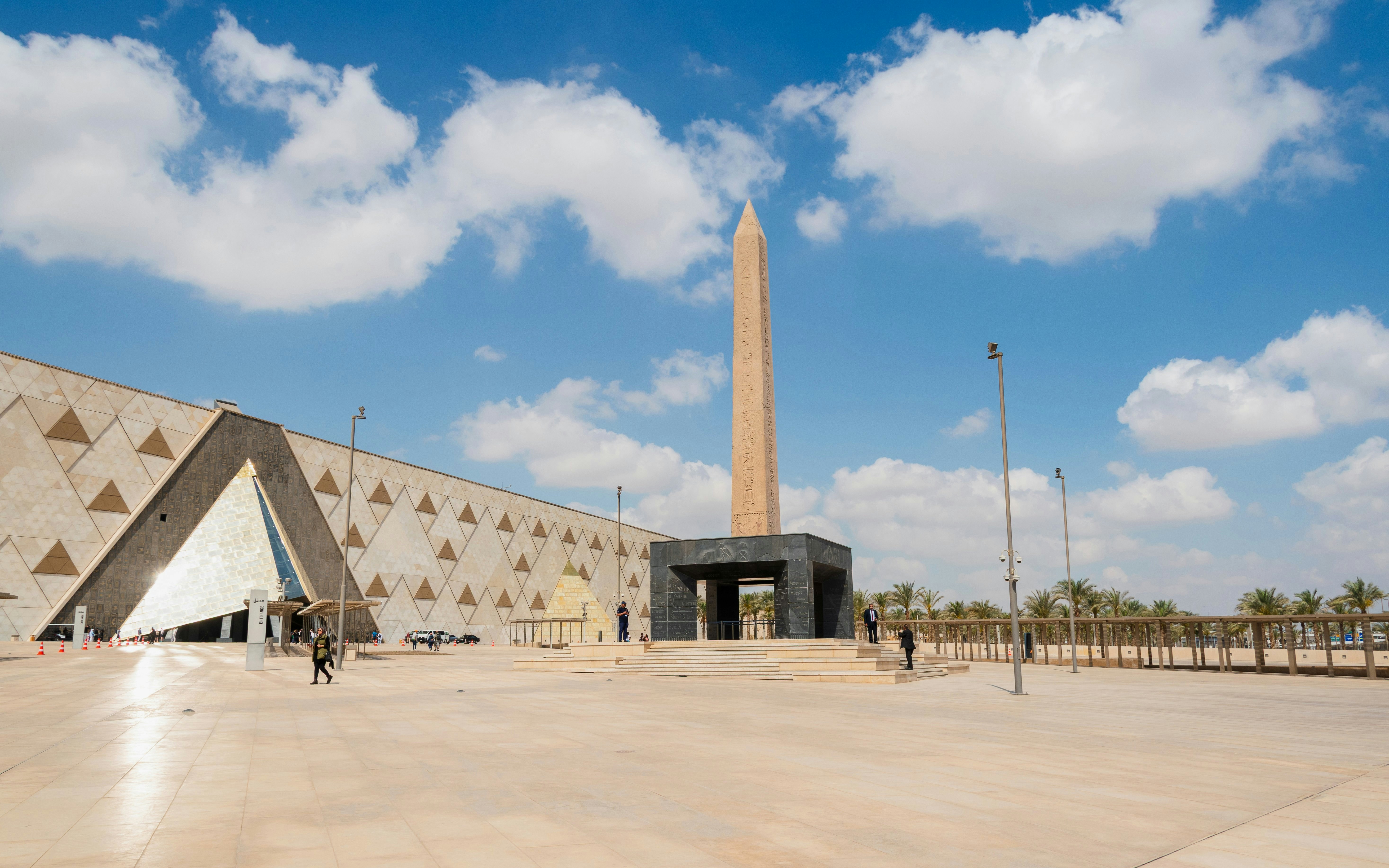
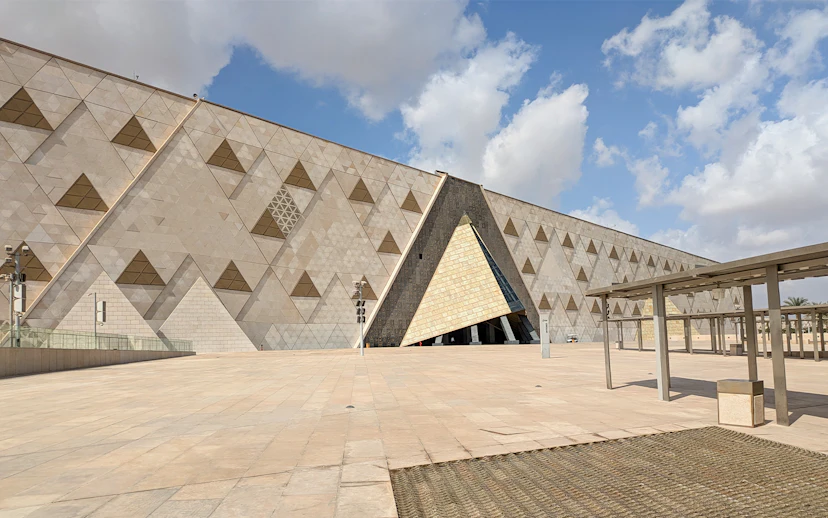
Hanging Obelisk at the entrance of the Grand Egyptian Museum, Cairo.

Top things to do in Cairo

Quick overview

  • Access: Included in all Grand Egyptian Museum tickets
  • Separate ticket: Not required
  • When you'll see it: At the start of the museum visit, in the entrance courtyard before the main galleries
  • Visit duration: 10–15 mins self-guided/15–20 mins with guide
  • Best time: Right after opening or in the late afternoon, when the courtyard is less crowded, and the light is softer
  • Restrictions: No special restrictions at the monument itself; museum-wide bans on drones, selfie sticks, and tripods apply

The Hanging Obelisk is included with all Grand Egyptian Museum tickets. No separate ticket is needed. You’ll see it at the very start of the visit in the entrance courtyard, before the main galleries, and most visitors pass it automatically on the way in. Book a guided tour or skip-the-line entry if you want context from the beginning rather than treating it as a quick photo stop.

How to best experience the Hanging Obelisk

Best time to visit

Go right after the museum opens or in the last 90 minutes before closing. The courtyard is exposed to the sun, and mid-day brings harsher light, more glare on the glass platform, and more people stopping for photos. If you want cleaner shots, don’t aim for noon.

How long to spend

Give it 10–15 minutes on your own, or 15–20 minutes with a guide. That’s enough time to view it from below, read the carving placement, and understand why it was suspended. If you just walk past, you’ll miss the whole point of the display.

Where it fits in your itinerary

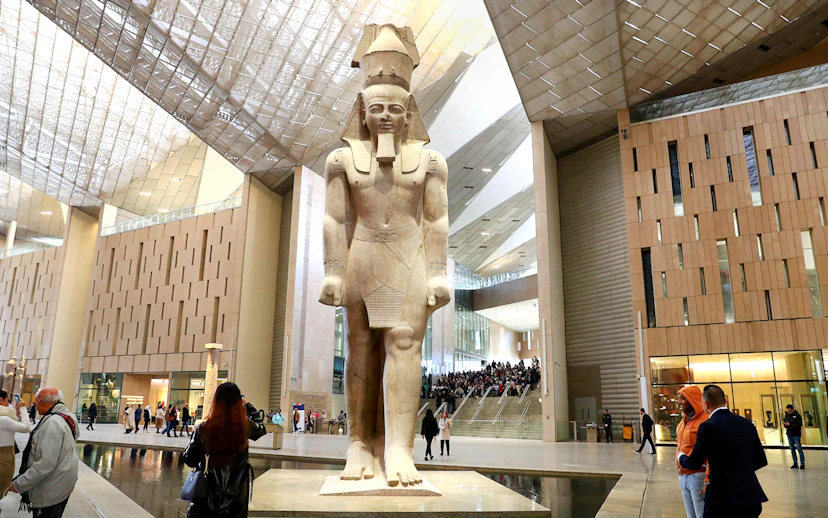
It comes first, before the Grand Hall and gallery sequence, so it’s easy to see while you’re still fresh. Don’t rush through it thinking you’ll return later. Start here, then continue to the Ramses II statue and the main galleries in one smooth route.

Crowd patterns

Crowds build in short bursts when tour groups arrive, especially in the late morning. That matters because the best angle is from directly beneath the obelisk, and the glass platform area fills quickly. If it’s busy, wait a few minutes rather than forcing a rushed photo.

What to prioritize if time is short

Stand on the glass platform and look straight up at the underside first. Then step back to see the full suspended shaft and the gap that makes the engineering legible. If you only have 5 minutes, focus on those two views, not wide selfies.

Common mistakes to avoid

Most visitors photograph it from the side and leave without looking underneath. The hidden underside cartouche is the reason this installation is different from a standard upright obelisk. Also, don’t arrive without sun protection — the entrance court offers little shade.

Best tickets to experience the Hanging Obelisk

Ticket typeWhy choose it

Skip-the-line ticket

Reach the entrance courtyard faster and see the Hanging Obelisk before tour-group bottlenecks build.

Guided tour

Understand the Ramses II cartouche, suspension design, and why this display changes how you read the monument.

Combo with Giza Complex

Pair the museum’s engineering-led presentation with Egypt’s best-known outdoor monuments in one efficient day.

Why it's worth seeing

Most visitors expect the Hanging Obelisk to be a dramatic entrance feature, but its real value is interpretive: it lets you see part of an ancient obelisk that was never meant to be viewed this way. The detail that changes the experience is underneath it, not in front of it. Use these three viewpoints to understand why this 27-meter monument works so well in a modern museum setting.

The underside cartouche

Stand directly beneath the shaft on the glass platform and look up. This is where the display becomes clear: the underside reveals Ramses II’s cartouche, a part of the monument that would normally remain hidden once an obelisk is erected.

The suspension gap

Step a few paces back and focus on the air gap between the obelisk and the ground. That empty space is the whole idea. It turns a familiar ancient form into an engineering display, showing you the shaft as an object rather than just a monument.

The entrance axis

Face the obelisk from the main approach into the museum and notice how it frames the move indoors. Behind it, the museum sequence continues into the Grand Hall. Seen from this line, it works as a threshold between open-air spectacle and artifact-focused galleries.

Historical & cultural significance

What most visitors don’t realize is that the Hanging Obelisk is both an ancient monument and a modern curatorial intervention. The 27-meter obelisk of Ramses II is around 3,375 years old, but at GEM it has been re-presented so visitors can study its underside and royal cartouche for the first time in this way. It once functioned as a statement of pharaonic power; today, it serves as the museum’s interpretive gateway to ancient Egypt.

Notable figures

Ramses II | Pharaoh

The obelisk bears his royal cartouche and anchors the monument in New Kingdom state power.

View Wikipedia

Roisin Heneghan | Architect

Co-founded Heneghan Peng, the architecture firm behind GEM’s pyramid-aligned museum design.

View Wikipedia

Shih-Fu Peng | Architect

Co-led the design approach that frames the obelisk as part of a larger arrival sequence.

View Wikipedia

Know before you go

  • Complex hours: Daily except Saturdays and Wednesdays, 8:30am to 7pm
  • Extended hours: Saturdays and Wednesdays, 8:30am to 10pm
  • Gallery hours: Daily except Saturdays and Wednesdays, 9am to 6pm; Saturdays and Wednesdays, 9am to 9pm
  • Last ticket purchase: 5pm on standard days, 8pm on Saturdays and Wednesdays

Address: Grand Egyptian Museum, Alexandria Desert Road, Kafr Nassar, Giza Governorate, Egypt

  • Nearest landmark: About 2km from the Giza Pyramids, with a typical drive of around 10 minutes
  • Entry point: Enter through the museum’s main security and entrance plaza; the Hanging Obelisk is in the outdoor arrival courtyard
  • Position in route: You’ll usually reach it within the first 5–10 minutes of entering, before the Grand Hall and main galleries
  • Wheelchair access: Yes; the Grand Egyptian Museum is wheelchair and stroller accessible
  • Route to the monument: Easy; the Hanging Obelisk is at the start of the visit, so no long gallery walk is required to reach it
  • Surface: The approach is paved and open-air, with a level viewing area around the glass platform
  • Facilities: Accessible restrooms and elevators are available within the museum complex
  • Comfort note: The courtyard has limited shade, so visitors sensitive to heat should aim for earlier or later time slots
  • Photography: Personal photography is generally allowed around the courtyard; flash restrictions apply inside museum spaces
  • Not allowed: Drones, selfie sticks, and tripods are prohibited across the museum complex
  • Food and drink: Outside food and beverages are not allowed
  • Bags: Large bags or suitcases may be restricted inside the museum
  • Commercial shoots: Written permission is required for commercial photography or video use

Frequently asked questions about the Hanging Obelisk

Yes. Entry to the Hanging Obelisk is included with every valid Grand Egyptian Museum ticket. No separate ticket exists.

More reads