Cairo Tickets


Not sure which GEM tour to book?

If ancient Egypt is the main reason you’re in Cairo, go for the dedicated GEM guided tour. You’ll get more time inside the museum, more context behind the artifacts, and a less rushed experience overall. If you want to cover Cairo’s biggest highlights in one day, the combo tour includes the Grand Egyptian Museum, the Pyramids, the Sphinx, and Khan el-Khalili Bazaar in a single itinerary.

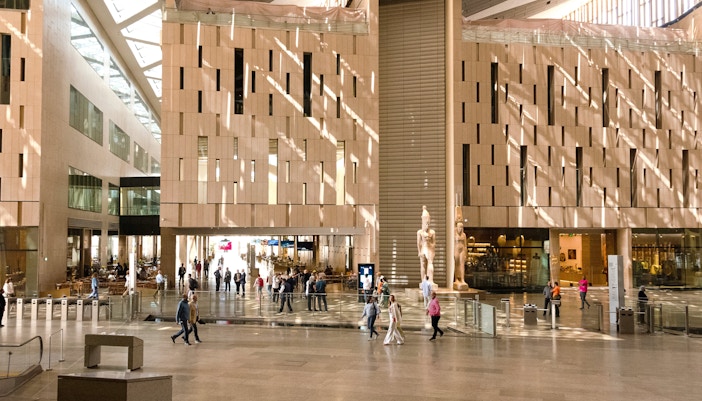
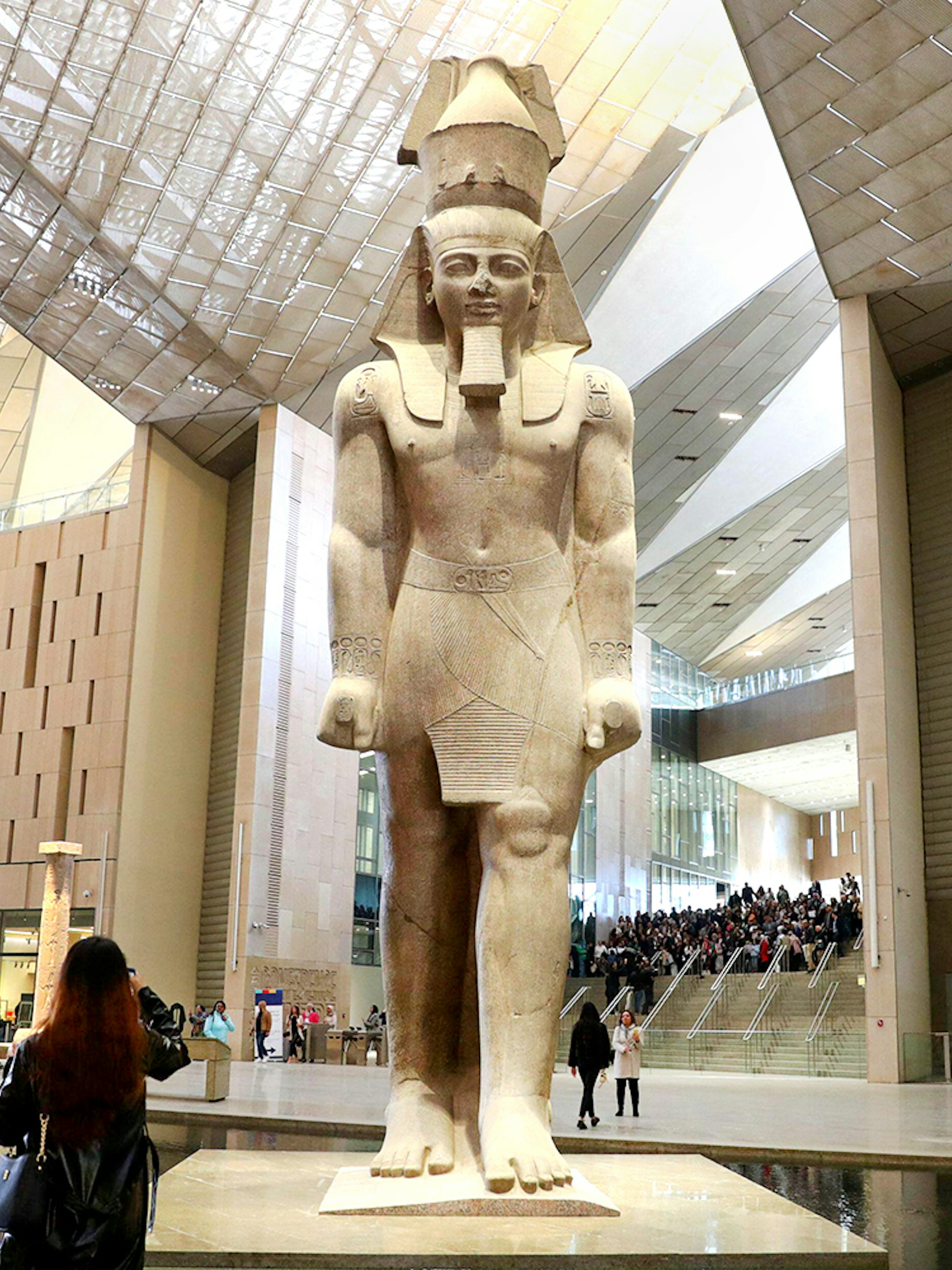
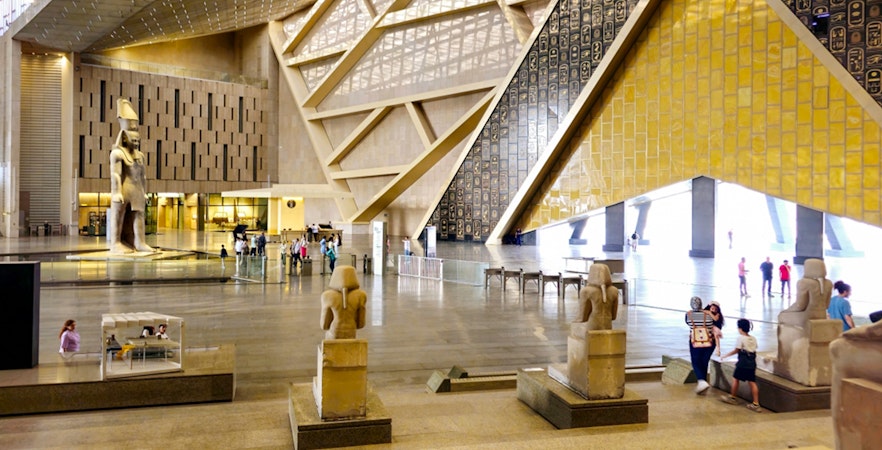
Grand Egyptian Museum interior with large statue and visitors exploring exhibits.


Grand Egyptian Museum guided tours: Quick overview

🎟️ Tours from EGP 1,950

👥 Group sizes: Private–35 guests

🌍 Languages: English, Arabic, French, German, Italian, Portuguese, Spanish

Skip-the-line included

↩️ Free cancellation up to 24 hours before

⏱️ Duration: 1.5 hours–full day

🎓 Guide profile: Egyptologists and licensed local guides

A guided tour of the Grand Egyptian Museum is...

What to expect on a guided tour of the Grand Egyptian Museum

Passengers seated inside an AC minibus during Ksamil Islands day trip from Tirana.
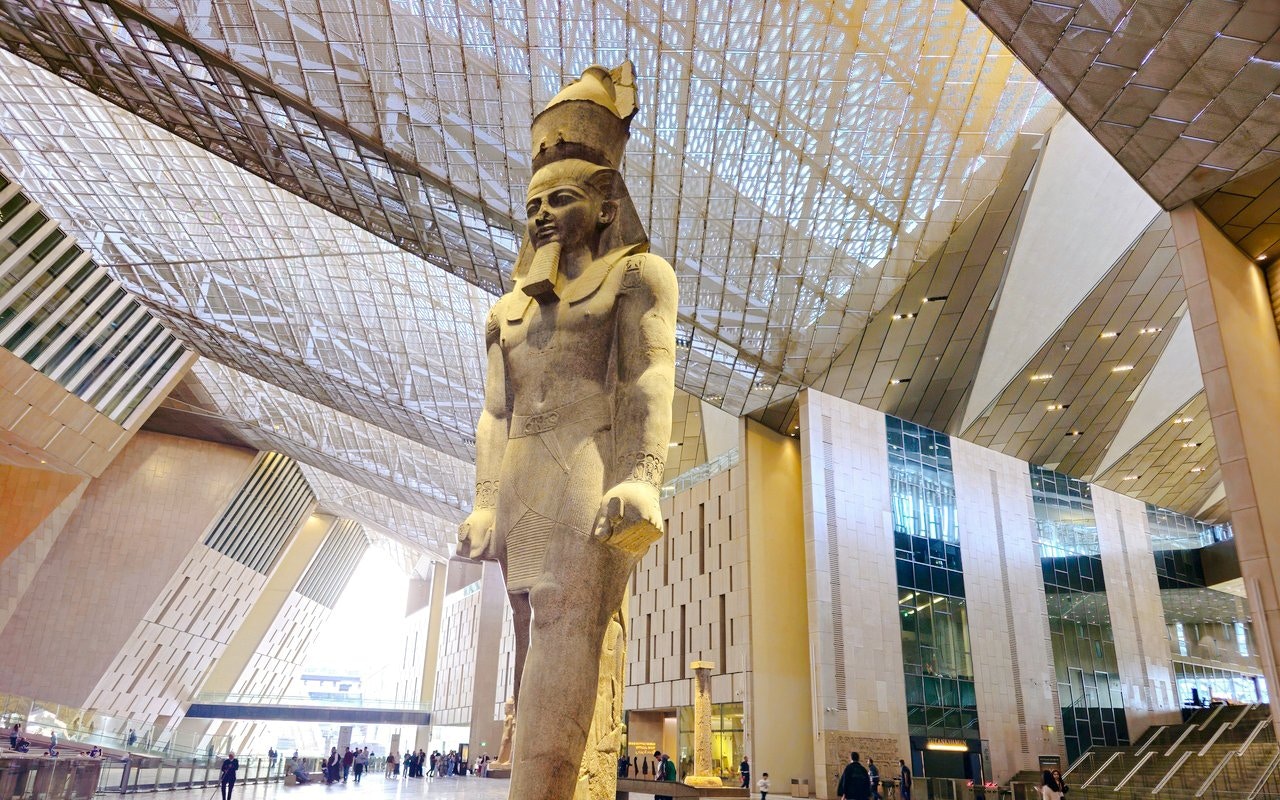
Visitors exploring the Grand Egyptian Museum interior with large statue and modern architecture.
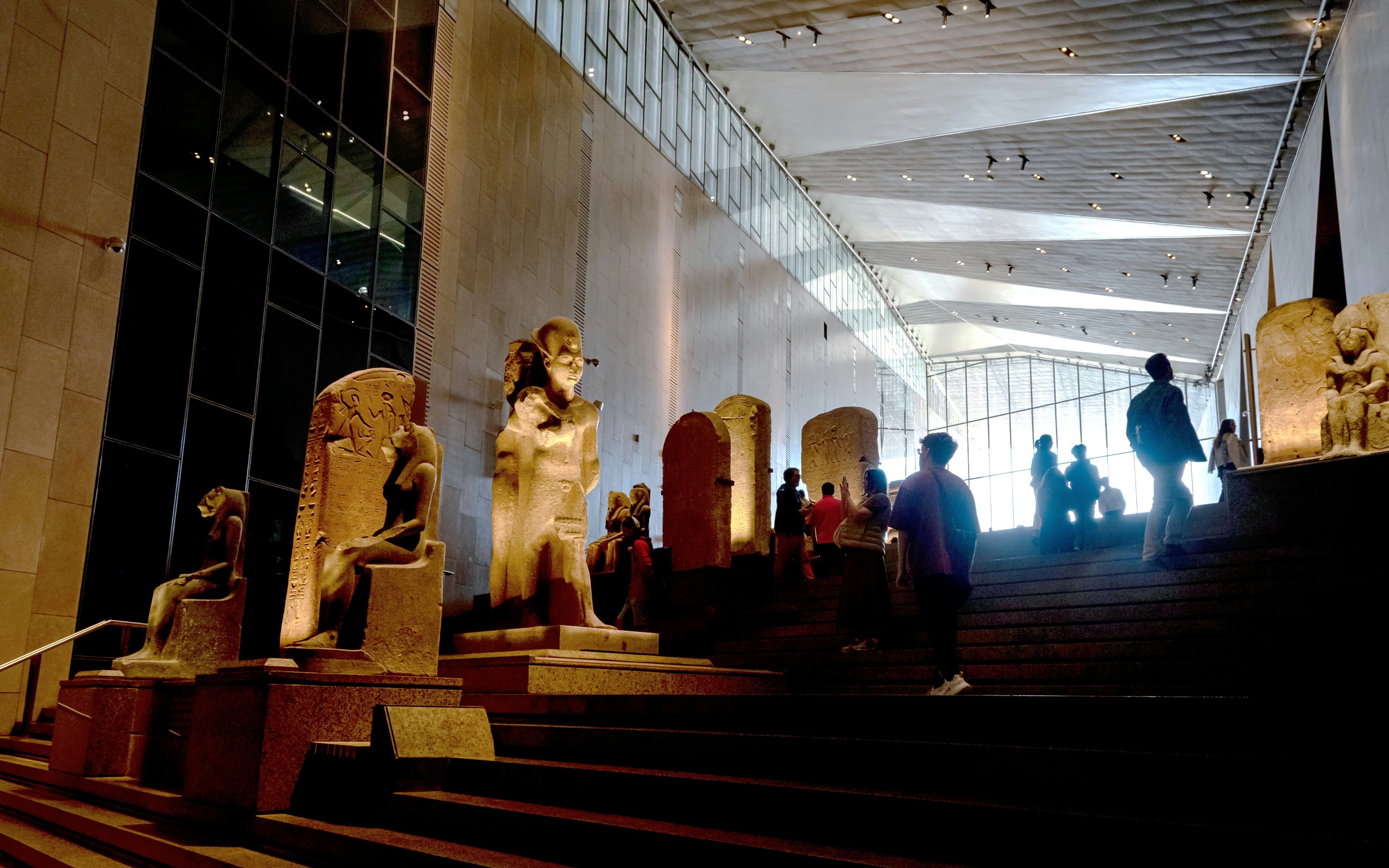
Grand Staircase with pharaonic statues and artifacts, Grand Egyptian Museum atrium.
Golden lion head detail on Tutankhamun's throne at the Grand Egyptian Museum.
Wooden shrine from King Tutankhamun's tomb at the Grand Egyptian Museum.
Great Solar Boat of Khufu displayed at the Grand Egyptian Museum.
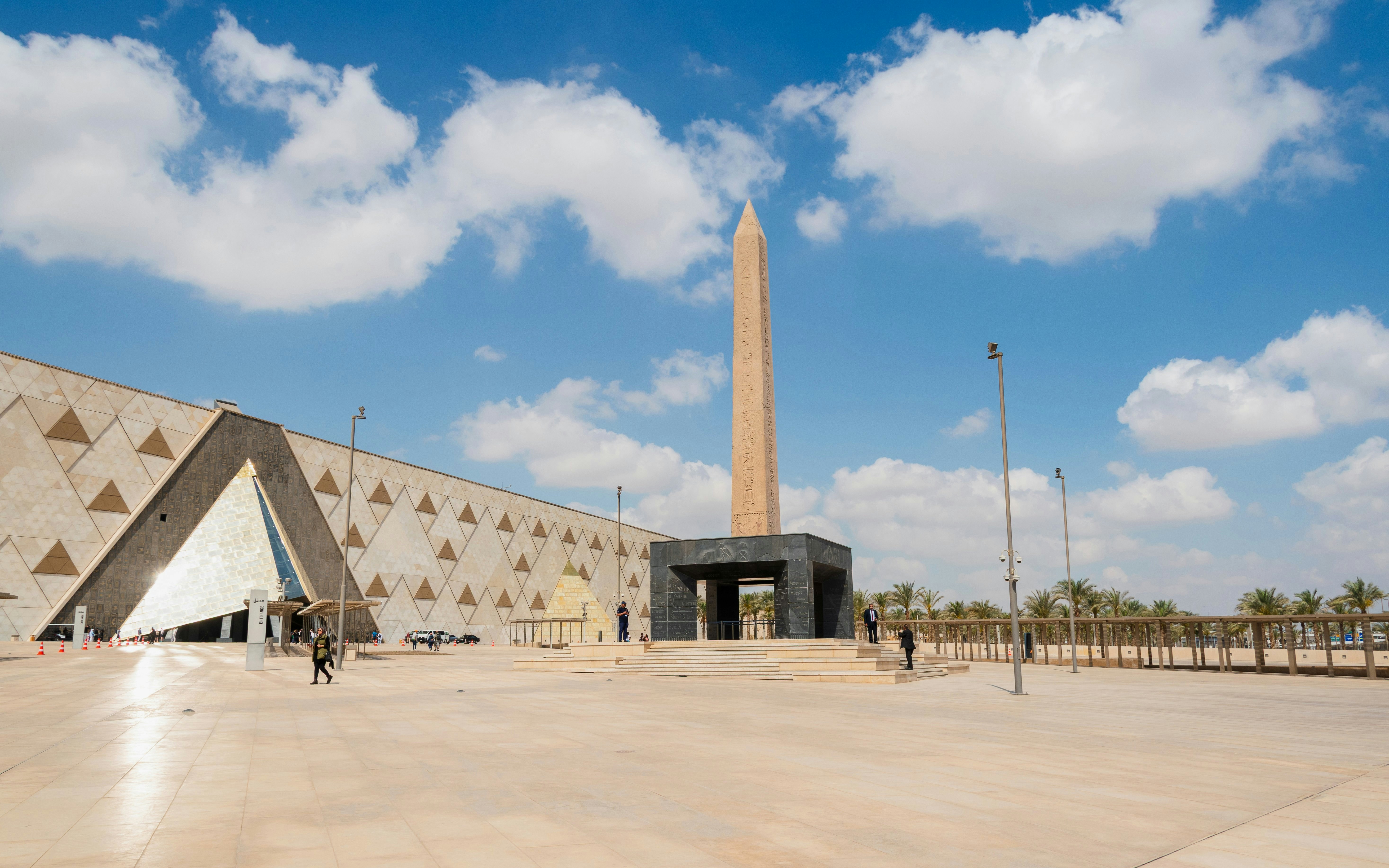
Hanging Obelisk at Grand Egyptian Museum with visitors exploring the plaza.
1/7

Start with pickup or museum check-in

Hotel-transfer tours begin with pickup from Cairo or Giza, while direct-entry guided options start at the museum entrance before security. Bring your passport or photo ID, and keep your ticket ready. Security screening is standard, and large bags, tripods, selfie sticks, outside food, and drinks aren’t allowed inside.

Enter through the Grand Hall and Ramses II

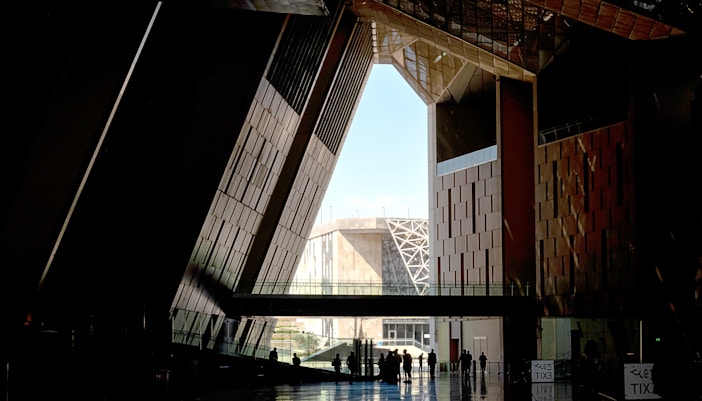
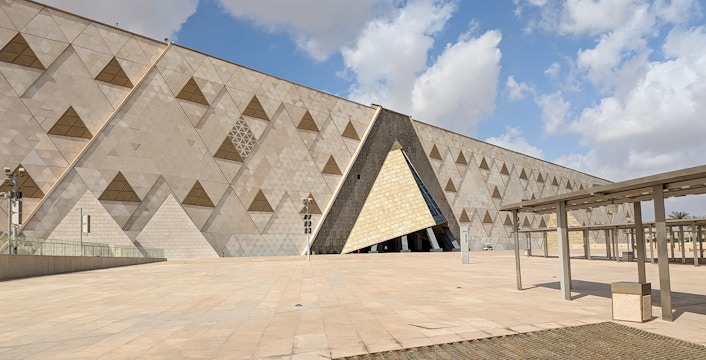
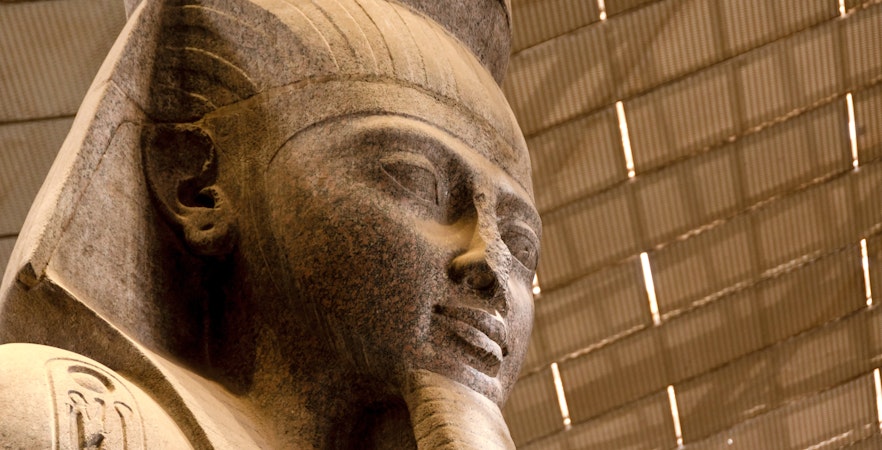
Most routes begin where GEM makes its strongest first impression: the entrance plaza, Hanging Obelisk, and the vast Grand Hall dominated by the colossal red-granite statue of Ramses II. This opening section gives your guide a chance to explain the museum’s scale, its pyramid-aligned architecture, and the dynastic story you’re about to follow.

Move up the Grand Staircase

From the atrium, the route usually rises along the Grand Staircase, where royal statues and architectural fragments are displayed across multiple levels. This is where the museum’s layout starts to make sense. Open glass elevators run beside the stairs, so visitors with mobility needs can still follow the same visual sequence.

Continue into the main galleries

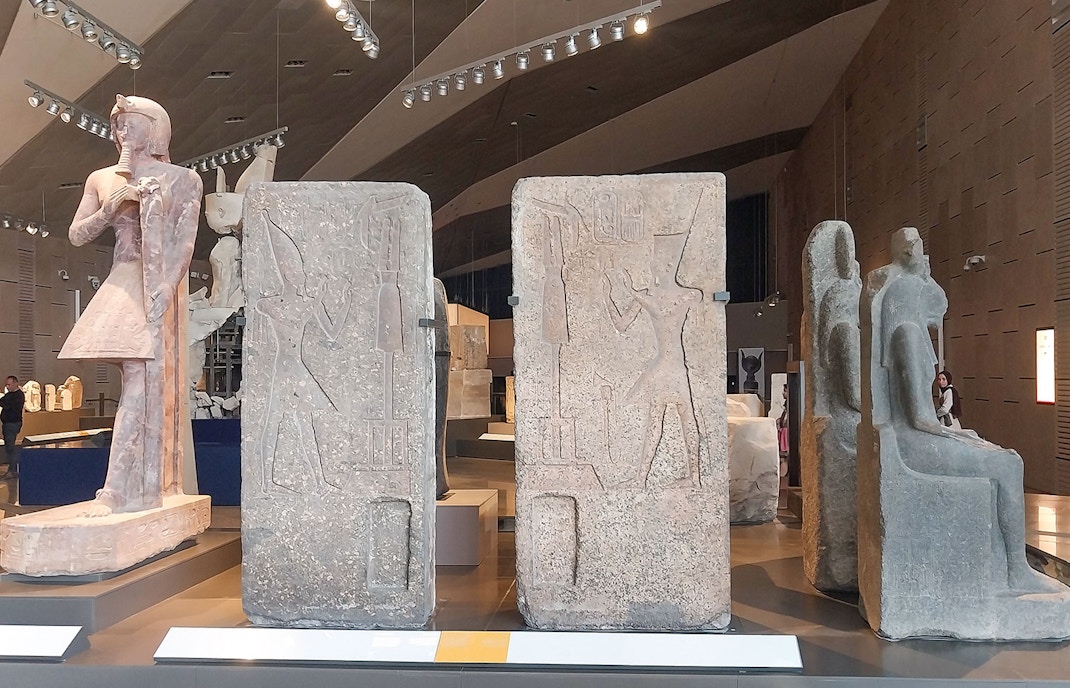
The 12 main galleries take you from prehistoric Egypt through the pharaonic period and into later eras. Rather than stopping at every case, guided tours focus on anchor objects and recurring themes: kingship, daily life, burial practice, religion, and artistic change. That keeps the visit coherent, especially if it’s your first time inside GEM.

Spend focused time in the Tutankhamun wing

This is the part many visitors book a guide for. The Tutankhamun galleries bring together over 5,000 tomb artifacts, including jewelry, chariots, funerary equipment, and the famous mask sequence. A guided visit helps you understand the logic of the display, not just the fame of the objects, and avoids the museum fatigue common in this section.

Khufu's Solar Boat

The tour includes access to the Solar Boat Museum, where one of the oldest intact wooden vessels in the world is displayed. The boat, over 43 metres long, was buried next to the Great Pyramid around 2500 BCE and reassembled over decades after its discovery in 1954. Your guide explains what it was built for and the craftsmanship that kept it intact for four and a half thousand years.

Finish with the Hanging Obelisk or stay longer

Before leaving, most tours pass the museum's suspended obelisk, a unique installation that holds the piece at eye level rather than upright, so you can read the hieroglyphs carved into all four sides without craning upward. It's one of the few places in the world where you can examine obelisk carvings at this close a range.

🏺 Guided or self-guided?

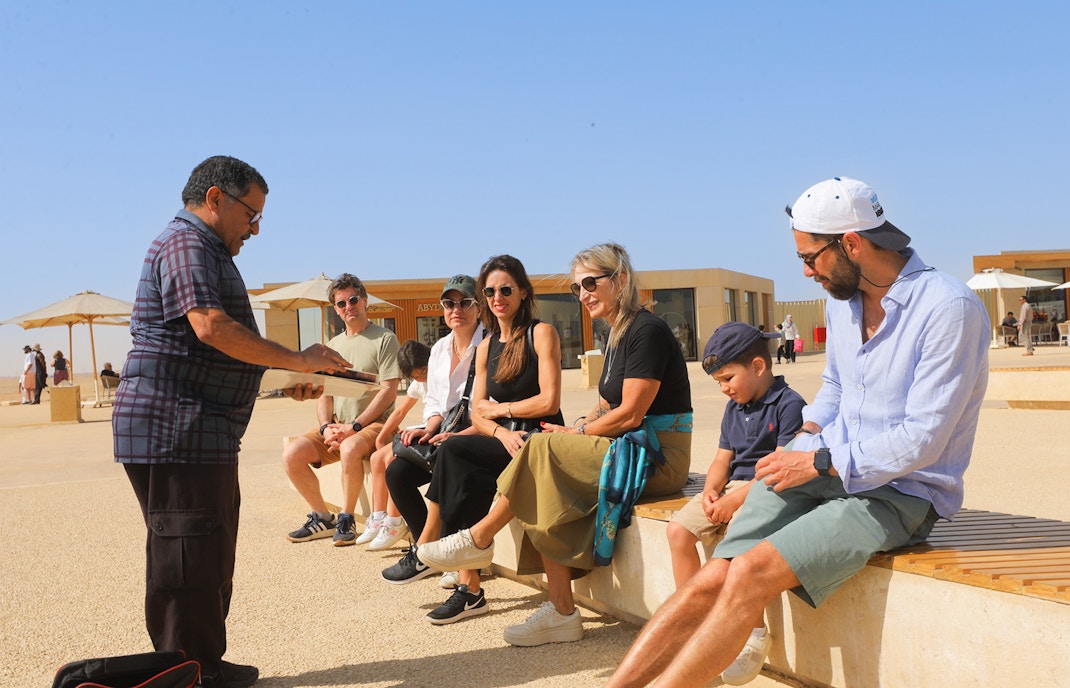
A self-guided visit gives you full flexibility to explore the museum at your own pace. A guided tour is better if you want expert context, a curated route through the massive complex, and less time figuring out what to prioritize, especially on your first visit to GEM.

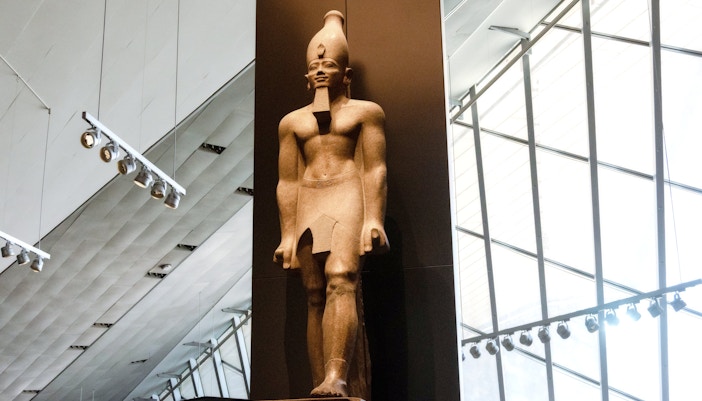
Colossal statue of Pharaoh Ramesses II in Grand Egyptian Museum atrium.

Which guided tour is best for you

❄️ Book winter slots early

🕘 Morning guided tours are usually the first to sell out between December and February.

🌍 Tours in specific languages also have limited daily slots.

📅 If your Cairo dates are fixed, booking 3–4 weeks ahead gives you the best choice of timings.

Highlights covered on the tour

Hanging Obelisk at the entrance of the Grand Egyptian Museum, Cairo.

Hanging Obelisk

Location: Entrance plaza

Walk beneath this elevated Ramses II obelisk and see carvings on its base, a view impossible in a traditional upright display.

Statue of Pharaoh in the Grand Egyptian Museum's modern atrium, Cairo.
Grand Staircase with pharaonic statues and artifacts, Grand Egyptian Museum atrium.
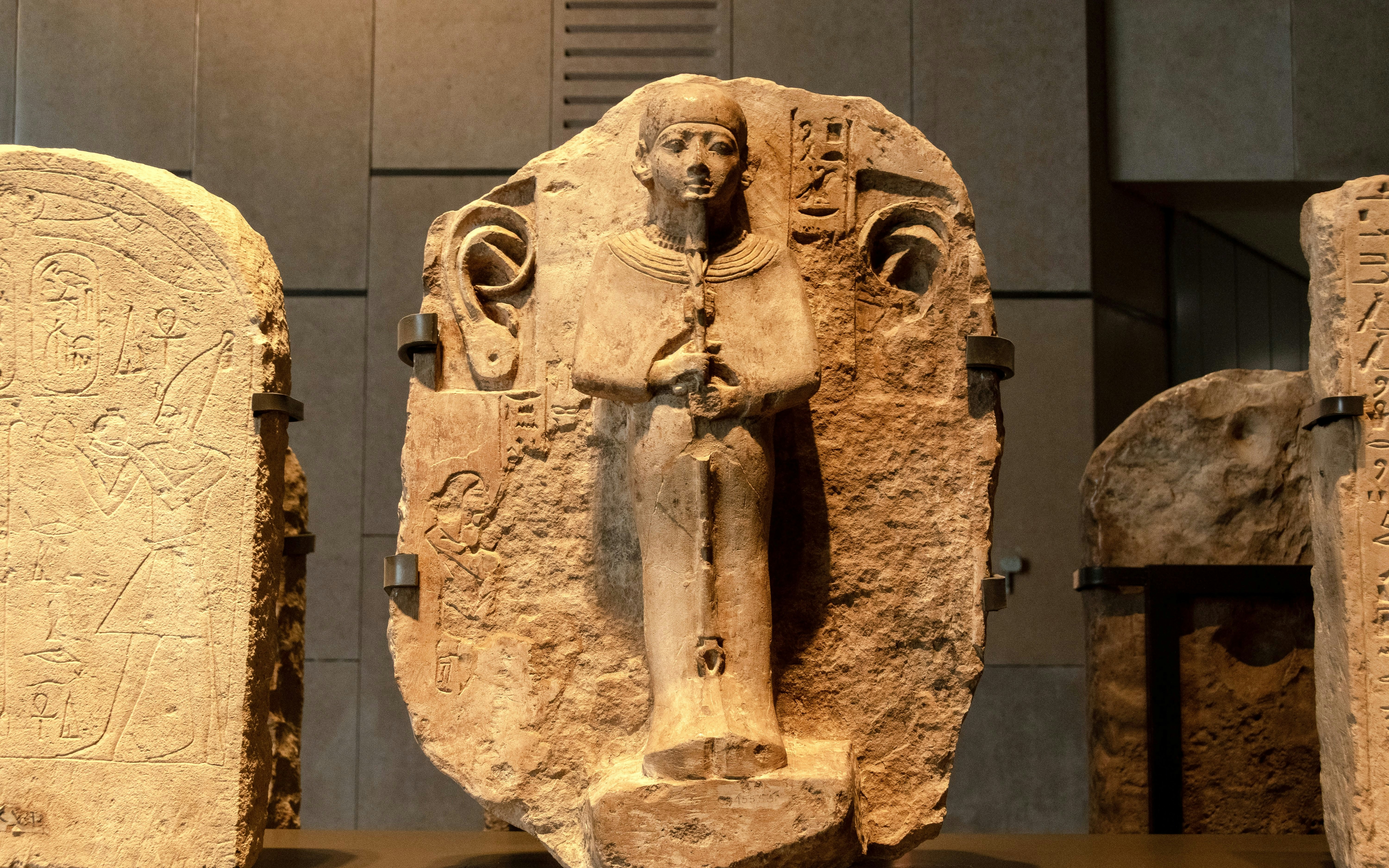
Statue of Ptah, "Ptah who listens to prayers," at Grand Egyptian Museum, Giza, Egypt.
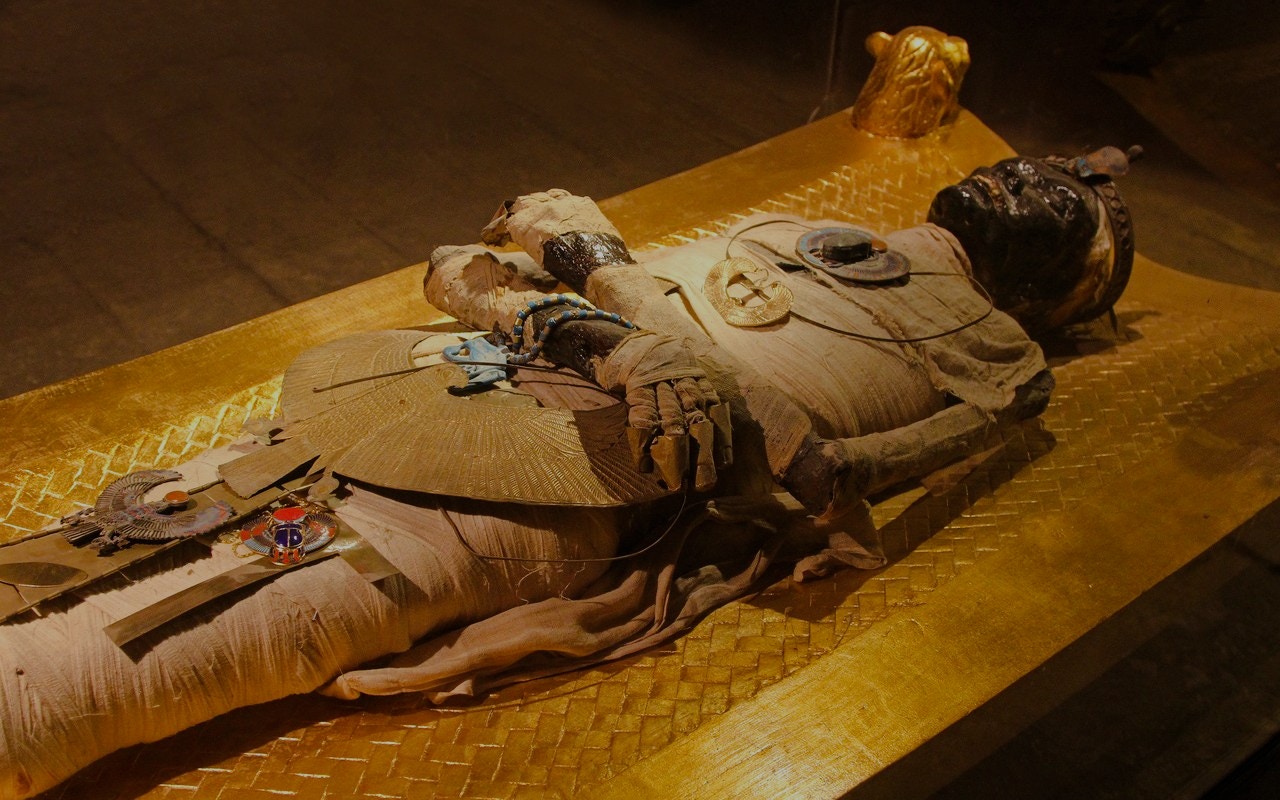
Mummy display at the Grand Egyptian Museum, featuring intricate ancient jewelry and golden sarcophagus.

Things to keep in mind when you go on a tour

  • Cloakroom: Near the entrance; use it for bags that exceed the permitted gallery size limit.
  • Toilets: The GEM has accessible restrooms on multiple floors throughout the building.
  • Information desks: Main visitor help points for directions, wheelchair requests, and general assistance.
  • Elevators: Glass elevators run beside the Grand Staircase and stop at multiple levels.
  • First-aid stations: Medical support is available across the complex for quick assistance.
  • Parking and drop-off: Paid parking areas are large; take a photo of your zone before entering.
  • Electric golf carts: Complimentary carts help with the long approach from parking or drop-off areas.
  • Food: A café and restaurant are located inside the complex, useful if you've added a lunch option to your tour, or want a break afterward.
  • Bookshop: The museum also has a bookshop near the exit with a solid selection of Egyptology titles and reproductions.
  • Passport or photo ID: Required for entry verification; non-Egyptians may be asked for passport details.
  • Small bag: Keep it within the gallery limit; larger bags must go to the cloakroom.
  • Footwear: Wear comfortable, closed-toe shoes; the museum involves significant walking across hard floors and the visit typically covers multiple floors.
  • Layers: A light jacket is useful, as the galleries are air-conditioned throughout. If you're visiting in summer, the transfer to and from the museum will be in an air-conditioned vehicle, but short outdoor walks are involved.
  • Supportive shoes: Expect a long indoor route across multiple levels, even on a highlights-focused visit.
  • Student ID: Bring it if you’ve booked a student-priced ticket and need to prove eligibility.
  • Smartphone: Required only if you’re joining the Discovery Challenge.
  • Prohibited items: Outside food, drinks, drones, selfie sticks, tripods, flash equipment, and sharp objects are not allowed.
  • Do not use flash photography inside the galleries; some Tutankhamun areas have stricter photo controls.
  • Keep phones on silent and avoid loud conversations in the exhibition halls.
  • Do not touch cases, sculptures, walls, or barriers anywhere along the route.
  • Live streaming and commercial photography require written permission; personal photography is more limited than many visitors expect.
  • Commercial use of any images or footage requires written permission from museum management in advance.
  • Selfie sticks and tripods are not allowed.
  • Food, drinks, smoking, and vaping are restricted to designated non-gallery areas.
  • Running, blocking circulation routes, or sitting and lying on gallery floors is not permitted.
  • Book winter guided slots 3–4 weeks ahead if you want morning entry or a specific language.
  • Choose an early museum entry if Tutankhamun is your priority; that section gets busier later in the day.
  • If you’re coming independently from central Cairo, Line 2 of the metro plus a taxi from Giza, Faisal, or Cairo University is usually the simplest public route.
  • Budget extra exit time if you use the elevators; the accessible route can be slower during peak departure periods.
  • Pair GEM with Giza only if you genuinely want a full day; the museum is large enough to justify a standalone visit.
  • If you sketch, bring pencils only; pens, markers, and paint aren’t allowed in gallery spaces.
  • If you have a specific area of interest (the Tutankhamun collection, the Solar Boat, a particular dynasty), mention it to your guide at the start. Guides adjust their route and emphasis when they know what matters to you.
  • The museum is genuinely large. If you want to continue exploring after the guided portion ends, ask your guide for a recommendation before they leave.
  • Wheelchair access: The museum is broadly step-free and designed to modern accessibility standards.
  • Grand Staircase access: Parallel glass elevators let visitors with limited mobility follow the same visual route.
  • Wheelchairs: Available free of charge at information desks; reserving ahead helps during busy periods.
  • Golf-cart support: Complimentary carts reduce the long distance from parking and drop-off areas.
  • Sensory support: Select objects have tactile models and Braille support for visually impaired visitors.
  • Exit timing: The accessible descent can require multiple lift changes, so allow extra time when leaving.

Frequently asked questions about Grand Egyptian Museum guided tours

Yes, if it’s your first visit. GEM is enormous, with 12 main galleries, the Grand Staircase, Tutankhamun’s collection, and Khufu’s Boat. Self-guided entry gives you flexibility, but a guided route helps you avoid decision fatigue and understand how the museum’s major sections connect.

More reads